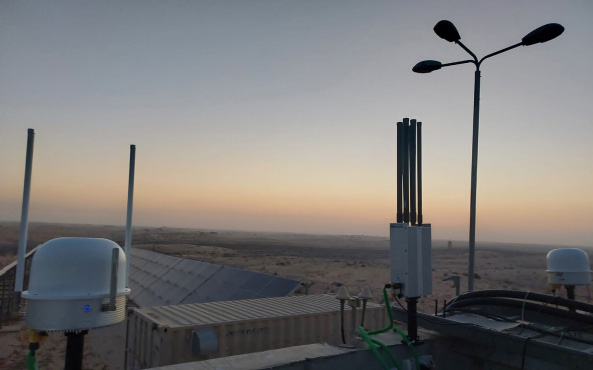
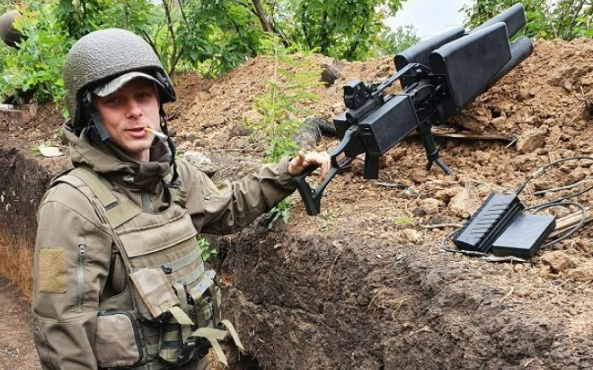
15 Anti-Drone Weapons and Counter-UAS Systems for Complete Security
 The Skylock Team

Abstract
- Anti-drone weapons range from handheld RF jammers and cyber takeover systems to autonomous interceptors, high-energy lasers, and high-power microwave effectors.
- These technologies solve different operational problems and should not be evaluated as interchangeable defeat methods. But these technologies solve different operational problems.
- This guide compares 15 current professional counter-UAS solutions across five categories: integrated multi-layer platforms, RF and cyber mitigation, portable systems, physical interceptors, and high-volume base-defence effectors.
- The aim is to help defence, government, airport, border, maritime, and critical infrastructure teams match the response method to the threat, operating environment, legal authority, collateral risk, and command workflow.
- The key consideration is how detection, verification, and authorised neutralisation work together as a complete operational system, rather than the effector alone.
Security teams no longer need to ask whether unauthorised drones present an operational risk. The harder question is what they are authorised, equipped, and prepared to do when one enters protected airspace.
The scale of routine drone activity illustrates the challenge. The US Federal Aviation Administration (FAA) says it receives more than 100 reports of drone sightings near airports every month. Federal Aviation Administration In this environment, a jammer, cyber takeover system, interceptor, laser, or integrated Counter-UAS platform may all have a role. They are not interchangeable.
There is no universal anti-drone weapon for every mission. Selection depends on the required outcome: detecting the threat early, verifying it quickly, reducing false alarms, neutralising it where authorised, controlling collateral risk, and coordinating the response through existing command systems.
This distinction matters because an effective Counter-UAS posture is built around the complete detect, verify and neutralise workflow, not the defeat method alone.
Top picks by category
For organisations building an initial shortlist, these five systems illustrate the strongest fit for each category defined in this comparison:
| Category | Top pick | Strongest fit |
| Integrated multi-layer Counter-UAS | Skylock Multi-Layer Drone Detection and Defense System | Organisations requiring detection, verification, authorised neutralisation, and open-architecture C4I integration |
| RF/cyber mitigation | D-Fend EnforceAir | Controlled RF cyber takeover where target compatibility and legal authority permit |
| Portable anti-drone weapon | DroneShield DroneGun Mk4 | Dismounted teams requiring rapidly deployable RF disruption |
| Drone-on-drone interceptor | Fortem DroneHunter F700 | Autonomous physical interception and net capture |
| High-volume base-defence effector | Epirus Leonidas | Defence environments addressing swarms and electronics-heavy threats with high-power microwave effects |
The appropriate choice still depends on threat profile, deployment environment, rules of engagement (ROE), integration requirements, and site-specific safety constraints.
Integrated multi-layer Counter-UAS platforms
Integrated platforms are designed for organisations that need a complete operational workflow rather than a standalone defeat tool.
They combine multiple sensing layers, verification, command-and-control, and mitigation options so operators can progress from an initial detection to a verified track and, where authorised, a response. This architecture is particularly relevant to military bases, airports, borders, ports, critical infrastructure, and other high-value sites where operational continuity matters.
Category comparison
| Solution | Sensing and verification | Response | Integration | Deployment fit |
| Skylock Multi-Layer System | RF, radar, EO/IR, acoustic options, multi-sensor processing | Configuration-dependent jammer, spoofer, laser, takeover and other mitigation | Open-architecture C4I and third-party sensor integration | Fixed, mobile and tactical configurations |
| Rafael Drone Dome | Multi-sensor detection, identification and classification | Multi-effector neutralisation and interception | Open C2 architecture | Defence and national-security environments |
| DroneShield DroneSentry / DroneSentry-C2 | RF and other integrated sensor options | Electronic warfare options depending on configuration | Unified C2 operating picture | Fixed and distributed operations |
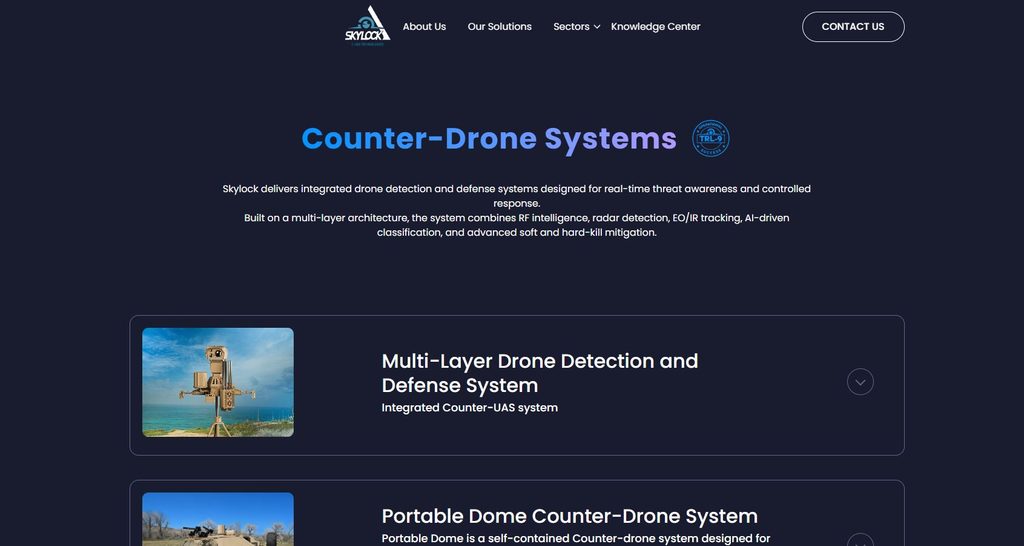
1. Skylock Multi-Layer Drone Detection and Defense System
Best for: Defence, government, airports, borders, high-value facilities, and other organisations requiring an integrated detect, verify and neutralise workflow.
Skylock approaches Counter-UAS as an operational architecture rather than a single anti-drone weapon. Its current solution portfolio combines RF intelligence, radar, EO/IR, acoustic detection options, AI/ML-assisted classification and sensor processing to support faster verification and reduce operator workload, and soft- and hard-kill mitigation capabilities. Its architecture is modular and designed to integrate additional sensors as mission requirements change.
That distinction is important in complex airspace. Radar may establish a track, RF sensing may add signal intelligence, and EO/IR can support visual verification. The C4I layer then brings those inputs into a common operating workflow so operators do not have to interpret isolated sensor feeds.
Key capabilities
- Multi-layer RF, radar, EO/IR, and configuration-dependent acoustic sensing
- Sensor fusion and assisted classification
- Open-architecture integration
- Jammer, spoofer, laser, and takeover options depending on system configuration
- Integrated command-and-control
The operational advantage is flexibility. A site does not need to treat the original sensor and effector mix as permanent. An open architecture can support changes to sensors and mitigation layers as the threat environment evolves.
Actual performance depends on the selected configuration, target profile, terrain, clutter, spectrum conditions, and local operating constraints. Mitigation also remains subject to legal authority, ROE, and site-specific safety requirements.
Pricing: Not publicly disclosed.
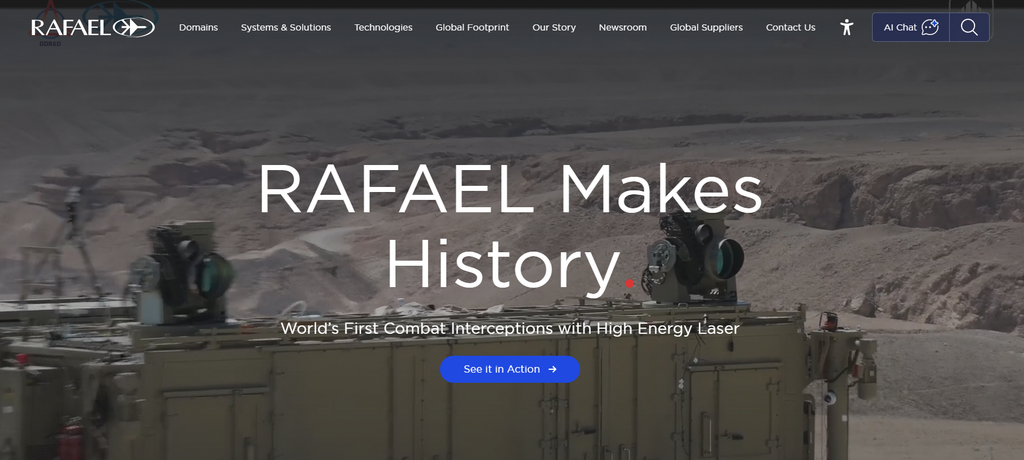
2. Rafael Drone Dome
Best for: Military and national-security users requiring an established multi-layer C-UAS architecture.
Rafael describes Drone Dome as a comprehensive system for automated detection, identification, classification, neutralisation, and interception of aerial threats. Its C2 environment integrates different sensors and effectors into a common air situational picture. Rafael also describes the architecture as modular and open to external sensors and effectors.
This makes Drone Dome relevant where Counter-UAS must operate as part of a wider air-defence environment rather than as an isolated security system.
Key capabilities
- Multi-sensor threat detection and classification
- Integrated C2
- Multiple mitigation and interception options
- Modular configuration
- External sensor and effector integration
The trade-off is the integration and sustainment burden associated with a full defence architecture. Procurement teams should assess the required configuration rather than assume every available sensor or effector is included.
Pricing: Not publicly disclosed.
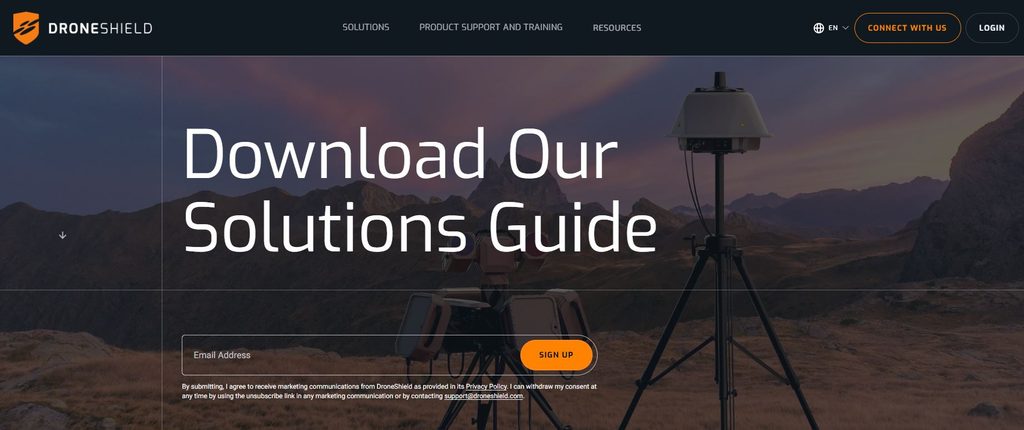
3. DroneShield DroneSentry / DroneSentry-C2
Best for: Fixed-site and distributed operations where RF sensing, electronic warfare, and a common Counter-UAS operating picture are priorities.
DroneShield’s portfolio spans fixed-site, on-the-move, and dismounted Counter-UAS. DroneSentry sits within its fixed-site offering, while DroneSentry-C2 provides the software layer used to coordinate the operating picture.
Its modular product structure makes it relevant to organisations that want to combine persistent site protection with deployable Counter-UAS elements.
Key capabilities
- Fixed-site Counter-UAS architecture
- RF and complementary sensing options
- Electronic warfare integration
- C2 coordination
- Multiple deployment models across the wider DroneShield portfolio
Consideration: Buyers should distinguish carefully between DroneSentry, DroneSentry-C2, and the individual detection or mitigation products connected to them. Capabilities depend on the deployed configuration.
Pricing: Not publicly disclosed.
RF, cyber, and electronic mitigation systems
Electronic mitigation acts on a drone’s communications, navigation, protocol behaviour, or control link rather than physically striking it.
The category includes several technically different approaches. Jamming interferes with relevant RF or navigation signals. Cyber takeover seeks to assume control of supported drones. Protocol-based approaches analyse communications between aircraft and controllers and, where supported, can enable controlled mitigation.
Performance therefore depends heavily on the target. Protocol, firmware, autonomy, RF conditions, spectrum congestion, and anti-jamming or anti-spoofing measures can all change the outcome.
Legal authority is equally important. For US airports specifically, the FAA currently states that it does not support C-UAS mitigation use by entities other than federal departments with explicit statutory authority. Organisations should verify the current federal, state, local, aviation, and spectrum authorities applicable to the specific deployment.
Category comparison
| Solution | Primary method | Drone/pilot localisation | Main consideration |
| D-Fend EnforceAir | RF cyber takeover | Yes, for supported targets | Compatibility and authority |
| Sentrycs | Protocol Analytics / Cyber over RF | Protocol-dependent | Target/protocol support |
| Rohde & Schwarz ARDRONIS | RF detection, direction finding and disruption | Drone and pilot direction | RF conditions and authority |
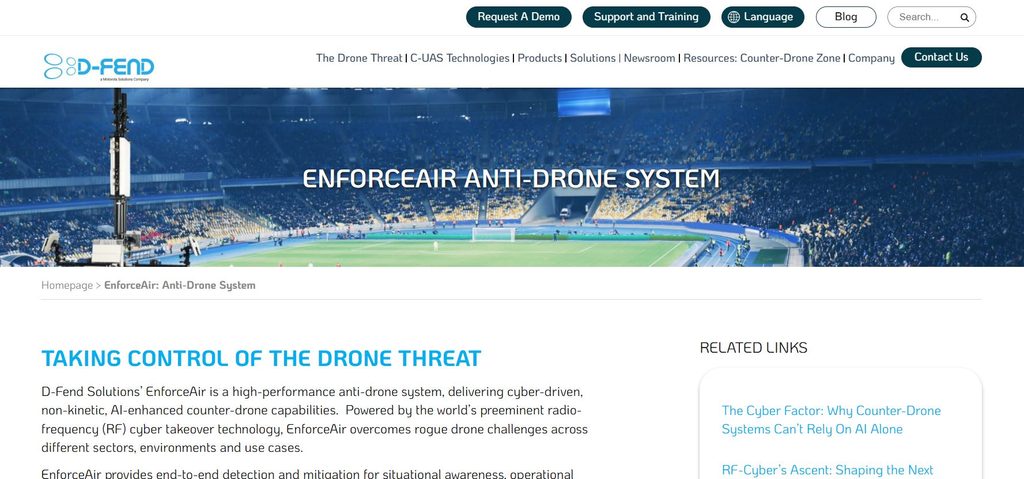
4. D-Fend Solutions EnforceAir
Best for: Sensitive sites requiring controlled, non-kinetic outcomes where supported.
EnforceAir uses RF cyber takeover to detect, locate, identify, and take control of supported rogue drones. Rather than simply denying a communications band, the system is designed to assume control and direct the aircraft to a defined landing area.
That makes it operationally different from broad RF disruption, particularly where continuity around communications and infrastructure is important.
D-Fend also offers EnforceAir PLUS, which adds complementary technologies including radar and an RF jamming option to the cyber-takeover architecture. D-Fend Solutions became part of Motorola Solutions in August 2026.
Strengths and considerations: A controlled landing can support evidence recovery and reduce some risks associated with uncontrolled drone descent. However, takeover depends on the supported target and operating conditions. It should not be assumed to work against every UAS.
Pricing: Not publicly disclosed.

5. Sentrycs Counter-Drone Platform
Best for: Airports, urban environments, critical infrastructure, and other locations where protocol-based detection and controlled mitigation are appropriate.
Sentrycs uses Protocol Analytics, also described as Cyber over RF. Its platform is available in fixed, portable, and vehicle-mounted configurations and can operate as a standalone system or integrate with existing infrastructure.
The approach can provide more information about supported drones than simple RF energy detection and can automate enforcement according to predefined operational parameters.
Key capabilities
- Protocol-based drone detection
- Tracking and identification
- Automated workflows
- Fixed, portable, and vehicle-mounted deployment
- Integration with wider security architectures
Its effectiveness still depends on the transmitting drone, protocol support, RF environment, and legal authority governing mitigation.
Pricing: Not publicly disclosed.

6. Rohde & Schwarz ARDRONIS
Best for: Organisations prioritising RF monitoring, signal classification, direction finding, pilot localisation, and authorised RF disruption.
ARDRONIS is a family of RF-focused Counter-UAS solutions. Rohde & Schwarz states that the system can automatically classify detected drone RF signals, determine the direction of the drone and pilot, and disrupt the radio-control link.
This combination can be useful when security teams need both warning and information about where the operator may be located.
Consideration: Like other RF-dependent systems, effectiveness varies with drone emissions and communications architecture. RF disruption also requires appropriate authority.
Pricing: Not publicly disclosed.
Portable and dismounted anti-drone weapons
Portable anti-drone weapons trade persistent, wide-area coverage for mobility.
They suit patrol teams, dismounted forces, convoy security, temporary sites, law-enforcement units, and rapid-response teams. Their main advantage is the ability to put an effector where the operator needs it quickly.
They should not, however, be confused with complete airspace-security systems. A handheld device is considerably more effective when a wider detection and verification architecture has already told the operator what the target is and where it is moving.
Category comparison
| Solution | Form factor | Response | Primary use |
| DroneShield DroneGun Mk4 | Handheld | RF/GNSS disruption | Tactical RF defeat |
| DedroneDefender 2 | Handheld | Precision RF/GNSS jamming | Integrated tactical mitigation |
| OpenWorks SkyWall Patrol | Handheld | Physical net capture | RF-restricted or evidence-sensitive environments |
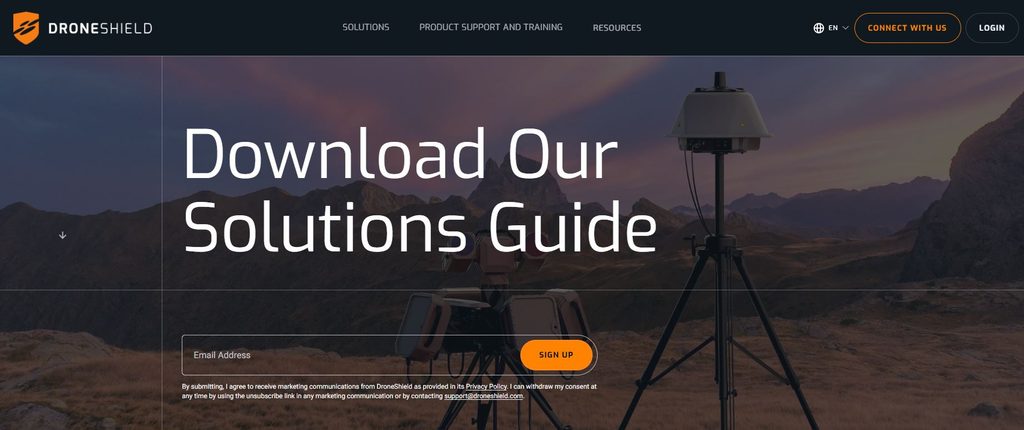
7. DroneShield DroneGun Mk4 / DroneGun Tactical
Best for: Dismounted security and defence teams requiring rapidly deployable RF mitigation.
DroneGun Mk4 is a handheld electronic countermeasure designed for rapid tactical use. DroneShield lists multiple ISM and GNSS bands among its effective frequencies and positions the product within its wider dismounted Counter-UAS portfolio.
Its compact form factor and fast start-up make it suited to teams that need immediate local response rather than permanent site coverage.
The principal limitation is common to handheld RF effectors: the operator needs a reliable target cue and appropriate legal authority to use the system. Target response will also depend on the drone’s communications and navigation architecture.
Pricing: Not publicly disclosed.
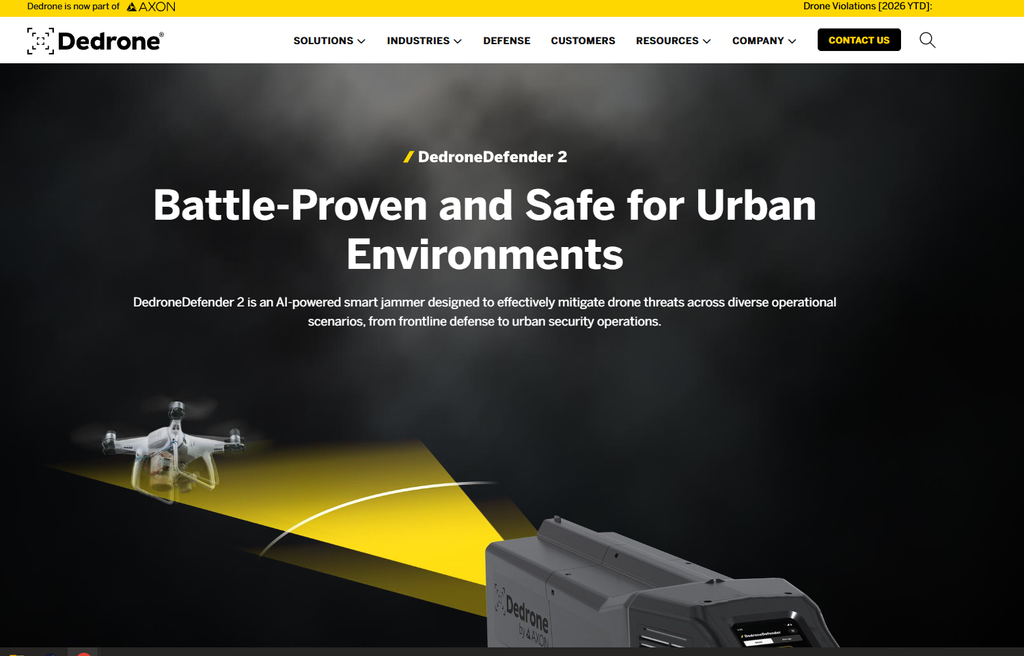
8. DedroneDefender 2
Best for: Security and defence teams that want handheld mitigation connected to a broader detection and tracking workflow.
DedroneDefender 2 is a smart jammer designed to receive drone information from DedroneTracker.AI and apply targeted RF mitigation. Dedrone states that the system supports precision targeting, broad-spectrum and GNSS jamming, and mitigation of multiple drones.
The integration with the detection layer is its key operational characteristic. Rather than relying entirely on an operator visually finding and assessing the aircraft, tracking data can support the mitigation workflow.
Consideration: Jamming remains subject to spectrum law, ROE, site restrictions, and target susceptibility.
Pricing: Not publicly disclosed.

9. OpenWorks SkyWall Patrol
Best for: Physical capture where RF disruption is unavailable or unsuitable, particularly when preserving the drone for investigation matters.
SkyWall Patrol takes a fundamentally different approach. It launches a specifically designed net to physically capture a drone. OpenWorks says the system uses a parachute to control the captured aircraft’s descent and keeps projectile components attached.
That makes it relevant to environments where electronic attack cannot be deployed or where recovering the aircraft intact has investigative value.
The trade-off is engagement geometry. Physical capture requires the target to enter the system’s engagement envelope and demands trained operator positioning.
Pricing: Not publicly disclosed.
Drone-on-drone and net-capture interceptors
Physical interceptors become important when the target cannot be reliably controlled through RF effects.
That may include autonomous, pre-programmed, jam-resistant, or otherwise non-cooperative UAS. Interceptors can ram, disable, or capture the aircraft without relying on its communications protocol.
They also introduce different risks. Airspace deconfliction, engagement geometry, falling debris, interceptor recovery, and positive identification all need to be addressed before launch.
Category comparison
| Solution | Intercept method | Target profile | Integration |
| Fortem DroneHunter F700 | Autonomous net capture | Group 1 and larger Group 2 threats | Open API, radar/C2 integration |
| Anduril Anvil | Autonomous kinetic interception | Group 1 and Group 2 | Lattice C2 |
| MARSS Interceptor-MR | Autonomous physical interception | Class I and II UAVs | NiDAR ecosystem |
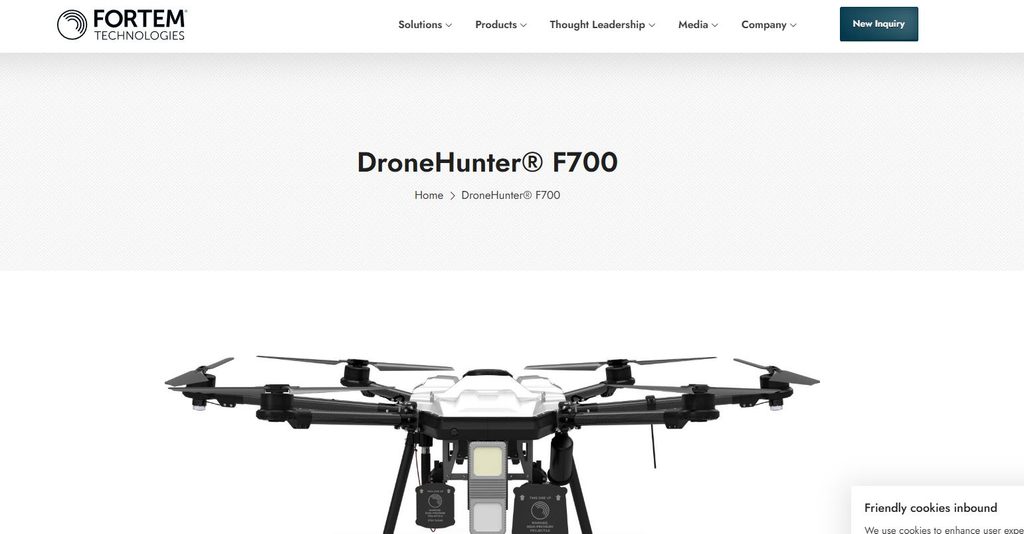
10. Fortem DroneHunter F700
Best for: Autonomous physical capture where reducing collateral effects and recovering targets are important.
DroneHunter F700 is a purpose-built Counter-UAS interceptor that uses onboard radar and autonomous guidance to pursue threats. Its NetGun payloads capture smaller targets, while other payload configurations address larger drones. Fortem reports more than 4,500 drone captures and states that the F700 integrates with third-party C2 systems through an open API.
The ability to capture rather than simply destroy a target can be valuable around sensitive facilities.
Considerations: Deployment still requires safe interceptor operating procedures, airspace coordination, defined launch authority, and sufficient physical space for the engagement.
Pricing: Not publicly disclosed.
11. Anduril Anvil
Best for: Defence organisations requiring high-speed autonomous kinetic interception of Group 1 and Group 2 UAS.
Anvil is an autonomous air vehicle cued through Anduril’s Lattice system. It navigates autonomously towards a potential threat while providing visual feedback to support positive identification. Once authorised, the standard Anvil uses kinetic energy to defeat the target. Anduril also offers Anvil-M, a munition-equipped variant for larger or faster threats.
This is a defence-oriented solution rather than a general-purpose option for civilian sites.
Considerations: Kinetic interception requires careful assessment of debris, engagement zones, positive identification, and ROE.
Pricing: Not publicly disclosed.
12. MARSS Interceptor-MR
Best for: Defence users evaluating autonomous physical interception integrated into a wider Counter-UAS architecture.
MARSS describes Interceptor-MR as an AI-enabled autonomous system designed to defeat Class I and II UAVs. It integrates with the company’s NiDAR architecture, which combines detection, verification, classification, C2, and countermeasure layers.
Its value is therefore not simply the interceptor itself, but the connection between detection, automated decision support, and launch.
Considerations: As with any physical interceptor, deployment planning must account for airspace management, engagement geometry, debris, and operator authority.
Pricing: Not publicly disclosed.
High-volume base-defence effectors
Some Counter-UAS missions are defined less by a single intrusion than by repeated attacks, simultaneous threats, or swarms.
In those conditions, magazine depth and cost per engagement become critical. Conventional interceptors may become difficult to sustain when low-cost drones arrive in volume.
Directed energy and cannon-based systems address that problem in different ways. They are most relevant to military bases, forward operating locations, border defence, and selected critical national infrastructure environments with the authority and safety controls required for their operation.
Category comparison
| Solution | Effector | Strongest mission fit | Key constraint |
| Epirus Leonidas | High-power microwave | Counter-swarm / counter-electronics | Integration, safety zones and mission authority |
| Raytheon HELWS | High-energy laser | Repeated drone engagements | Line of sight, power and thermal requirements |
| EOS Slinger | 30 mm cannon | Mobile/fixed hard-kill C-UAS | Ballistic safety and debris |
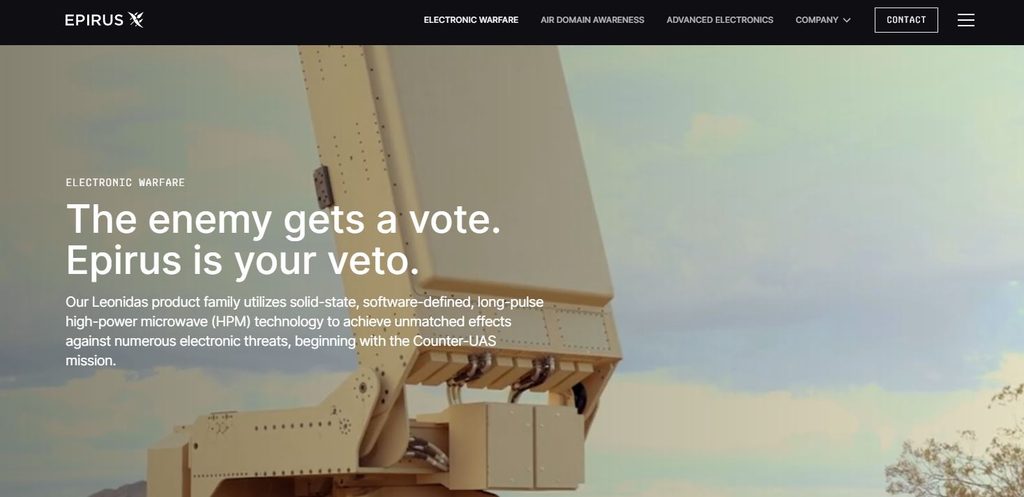
13. Epirus Leonidas
Best for: Military organisations evaluating scalable electronic effects against drone swarms.
Leonidas uses solid-state, software-defined high-power microwave technology for Counter-UAS and wider counter-electronics missions. Epirus positions the system around the ability to affect multiple electronic threats without consuming a conventional ammunition magazine. The platform also offers an open API for integration with C2 systems, including FAAD C2.
This addresses one of the central challenges of high-volume UAS attacks: an adversary may be able to generate more targets than a conventional interceptor inventory can economically defeat.
Considerations: Directed-energy deployment requires appropriate safety, electromagnetic compatibility, integration, and operational-authority assessments.
Pricing: Not publicly disclosed.
14. Raytheon High-Energy Laser Weapon System
Best for: Defence users requiring repeated directed-energy engagements against airborne threats.
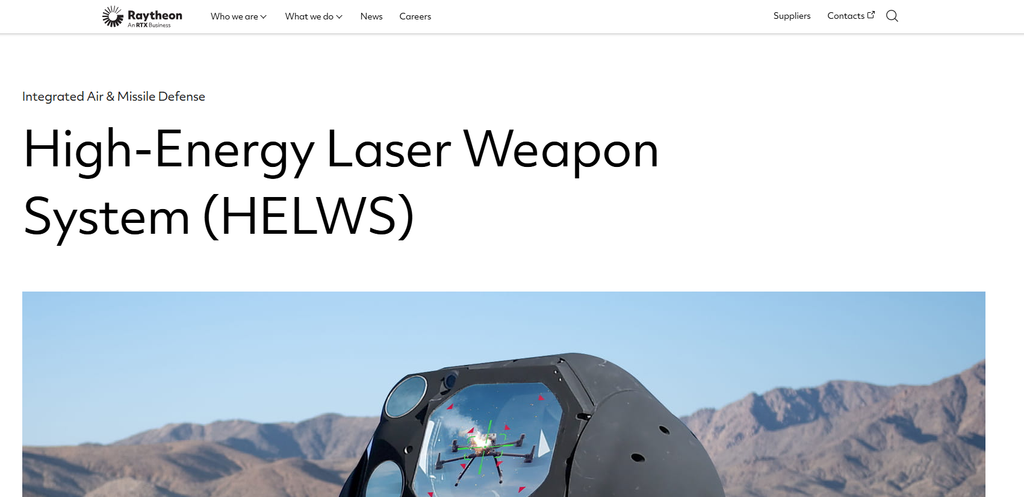
Raytheon’s HELWS uses high-energy photons to detect, track, and defeat drones and other airborne threats. RTX states that the system has accumulated more than 25,000 operational hours and can operate standalone or integrate with existing air-defence systems.
The key operational advantage is magazine depth. Because the system is electrically powered, repeated engagements do not require conventional rounds or missiles.
That does not make lasers unconstrained. Effective use still depends on line of sight, atmospheric conditions, power, thermal management, platform integration, safety controls, and engagement authority.
Pricing: Not publicly disclosed.
15. EOS Slinger
Best for: Mobile or fixed-site hard-kill defence where a cannon-based Counter-UAS effector fits the ROE and safety environment.
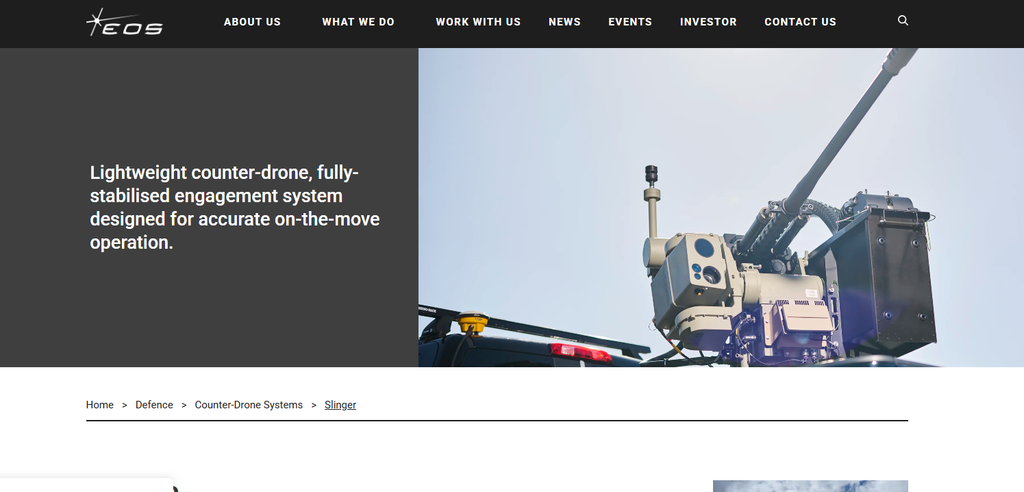
Slinger combines an Echodyne 4D targeting radar, a stabilised 30 mm cannon, specialised ammunition, and EOS pointing technology. EOS states that the system is fully stabilised for on-the-move operation.
Compared with electronic mitigation, Slinger provides a physical defeat option that does not depend on gaining access to a drone’s communications protocol.
The trade-off is clear: cannon-based interception creates ballistic and debris considerations that may rule it out for airports, dense public areas, and other environments without suitable safety zones.
Pricing: Not publicly disclosed.
How we selected and compared these anti-drone weapons
This comparison was researched in September 2026 using current official vendor product information, Skylock-approved positioning, and official aviation guidance. No hands-on product testing is claimed.
Solutions were included if they are professional Counter-UAS systems with a current official source and a documented role in mitigation, interception, capture, directed energy, or integrated detect, verify and response operations. DIY equipment, consumer products, improvised techniques, and products without a clear official source were excluded.
Each solution was assigned to one primary category based on its strongest operational role. Comparison factors included operating environment, response method, integration, deployment model, collateral considerations, legal and ROE dependency, sustainment, and procurement relevance. Most vendors do not publish pricing or complete performance data, so unsupported range, effectiveness, and compatibility assumptions have been avoided.
How to choose the right anti-drone weapon
The most important selection question is not simply how do we defeat the drone? It is what outcome does the mission require, and what response can we safely and legally execute?
Start with five factors.
1. Threat profile. A remotely piloted commercial quadcopter, FPV aircraft, autonomous UAS, fixed-wing platform, payload-carrying drone, and coordinated swarm create different sensing and tracking requirements. RF-only mitigation becomes less dependable when the target does not rely on a susceptible control link.
2. Operating environment. An airport needs different controls from a forward operating base. Urban sites must manage clutter and public-safety consequences. Maritime deployments contend with different environmental and integration conditions. Borders may prioritise distributed coverage and mobility.
3. Response authority. Determine who is legally permitted to detect, interfere with, take control of, capture, or physically defeat an aircraft. This assessment should happen before selecting an effector. The FAA, for example, explicitly distinguishes detection from mitigation and restricts US airport C-UAS mitigation to entities with statutory authority.
4. Collateral risk. Jamming can affect spectrum users. Physical interception can create debris. Cannon systems introduce ballistic hazards. Directed-energy systems have their own safety and deconfliction requirements. These factors require a structured operational risk assessment before deployment. The safest response is therefore mission- and site-dependent.
5. Integration requirements. A technically effective weapon can still create an operational problem if it sits outside the command workflow. Determine whether tracks, verification data, alerts, and response status need to feed an existing C2/C4I, SOC, VMS, PSIM, or ISR environment.
From there, category selection becomes clearer:
- Choose an integrated multi-layer platform when the requirement is a complete detect, verify and neutralise workflow.
- Choose an RF or cyber system when non-kinetic mitigation is authorised and suited to the target.
- Choose a portable system when mobility and rapid tactical deployment take priority.
- Choose a physical interceptor when RF mitigation may be ineffective or physical capture is required.
- Choose a high-volume effector when repeated attacks, swarms, magazine depth, and force protection define the problem.
Skylock: Integrated Counter-UAS for mission-ready airspace protection
Skylock is designed for organisations that need Counter-UAS capability as an operational system rather than a standalone anti-drone weapon.
Its multi-layer architecture connects detection, verification, authorised neutralisation, and open-architecture C4I integration. The objective is to give operators a coherent low-altitude airspace picture and move verified threats through a defined response workflow with fewer manual handoffs and lower operator burden. Skylock’s current portfolio includes RF, radar, EO/IR, and acoustic detection options alongside configuration-dependent mitigation capabilities.
This architecture supports several operational requirements:
- Multi-Layer Drone Detection and Defense: integrates complementary sensing, verification, C2, and mitigation layers.
- C-UAS Detection: combines appropriate radar, passive RF, EO/IR, and acoustic technologies according to deployment requirements.
- Mitigation: supports configuration-dependent electronic and other response options where authorised.
- Portable Counter-UAS: extends protection to tactical and rapidly deployable missions.
- Border Protection: supports low-altitude awareness across complex and distributed operating environments.
- Airport and Airspace Protection: connects detection and verification with existing operational workflows while maintaining regulatory alignment.
- Critical Infrastructure Protection: integrates aerial threat awareness into broader site-security and command environments.
The architecture also addresses a recurring problem in Counter-UAS procurement: the threat changes faster than many security systems are replaced. Open integration allows sensing and mitigation layers to evolve without requiring the entire command environment to be rebuilt.
Actual capabilities remain configuration-dependent. Sensor performance varies with terrain, clutter, spectrum conditions, target characteristics, weather, and installation. Mitigation must always align with applicable law, ROE, regulatory requirements, and site-specific safety constraints.
Frequently asked questions
What is an anti-drone weapon?
An anti-drone weapon is a system used to disrupt, capture, disable, take control of, or physically defeat an unauthorised UAS. Examples include RF jammers, cyber takeover systems, net capture devices, drone interceptors, lasers, high-power microwave systems, and kinetic effectors. Integrated Counter-UAS platforms go further by connecting these response options with detection, verification, and command-and-control.
Are anti-drone weapons legal?
Legality depends on jurisdiction, operator, technology, and operating environment. Authorities to jam communications, interfere with navigation, take control of aircraft, or physically intercept drones are often restricted. In the US airport environment, the FAA states that only specified federal departments currently have statutory authority to operate UAS mitigation systems. Organisations should establish legal authority and ROE before selecting or deploying mitigation.
Is a drone jammer the same as a Counter-UAS system?
No. A jammer is an effector that interferes with selected RF or navigation links. A complete Counter-UAS system can combine detection, tracking, verification, C2/C4I, and one or more authorised mitigation options. Treating a jammer as the entire system can leave major gaps in detection, identification, evidence, and command coordination.
What is better: jamming, takeover, or interception?
Each addresses a different requirement. Jamming can disrupt susceptible links, takeover can create controlled outcomes against supported drones, and physical interception can address targets that do not respond to electronic effects. Selection depends on target architecture, operating environment, legal authority, ROE, collateral risk, and the required outcome.
Do anti-drone weapons work without detection systems?
Some portable systems can be operated against a visually identified target, but that does not provide complete airspace protection. Integrated detection and verification give operators earlier warning, stronger target identification, and more time to select an appropriate response. For persistent protection, the weapon should normally form part of a wider detect, verify and neutralise architecture.
Complete Counter-UAS protection starts before the weapon
The key procurement question is not which anti-drone weapon is strongest? It is which response architecture fits the threat, environment, authority, collateral risk, and command workflow?
A complete Counter-UAS posture therefore starts before neutralisation. It begins with detection, progresses through rapid verification, and applies an authorised response only when the operational picture supports it.
For organisations that need more than a point solution, Skylock brings sensing, verification, C4I integration, and authorised mitigation into a mission-ready, multi-layer architecture built around interoperability, operator-light workflows, sustainment, and operational continuity. Talk to a Skylock defence expert to evaluate your drone threat profile, site constraints, legal and ROE requirements, and Counter-UAS deployment options.