Top 13 Radars for Drone Detection by Category and Use Case
 The Skylock Team
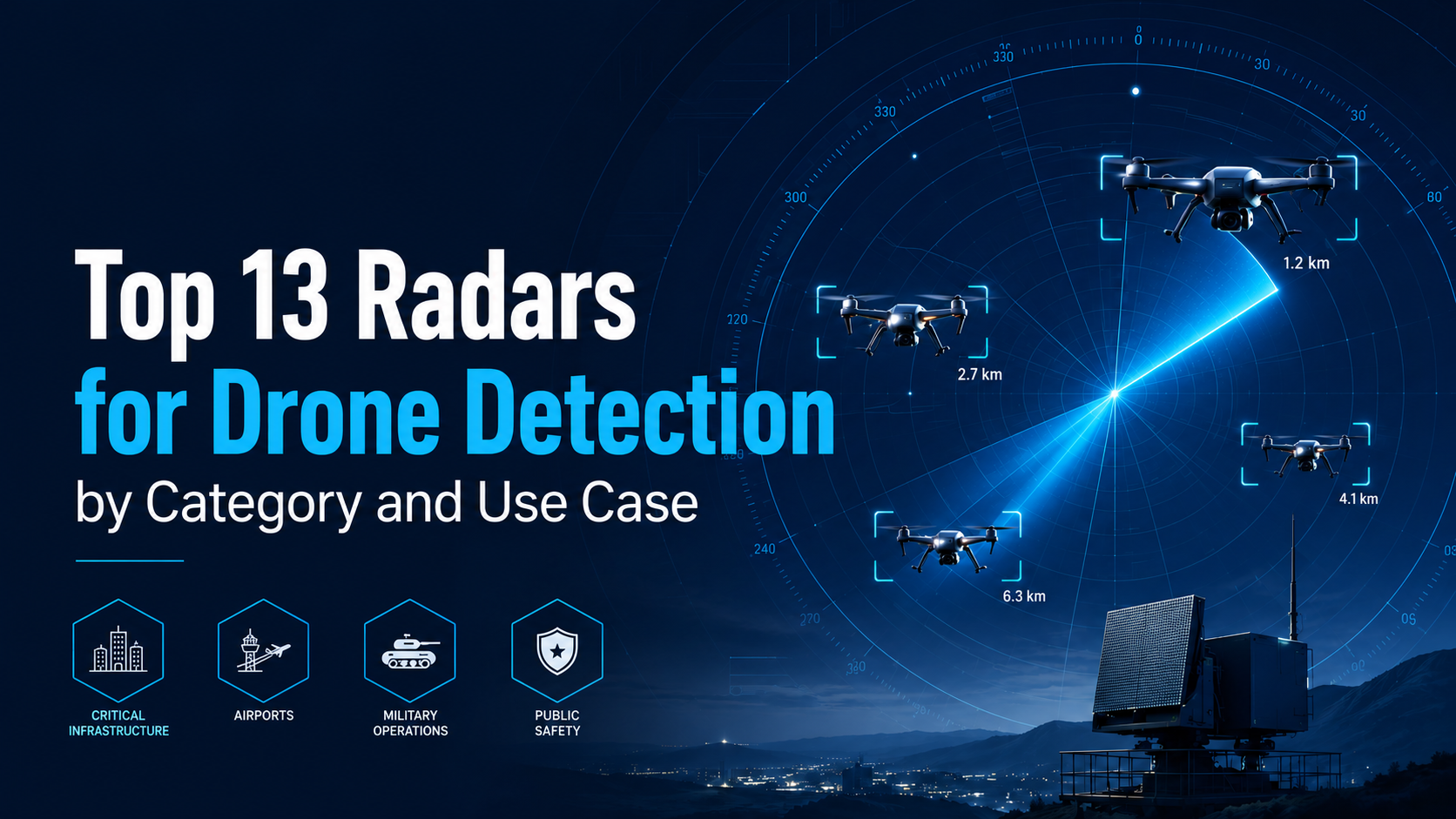
The primary vulnerability in airspace security is not a lack of signal; it is the presence of noise. When evaluating counter-unmanned aerial systems (C-UAS) infrastructure, security operators often assume the primary goal is raw tracking distance. Yet, the true point of failure in most counter-drone programmes is rarely the maximum range printed in a product brochure.
Instead, systems fail because low-altitude clutter, birds, weather, and disconnected alarms create operator overload. That challenge is not theoretical. In controlled experimental work comparing drone and bird micro-Doppler signatures using 24 GHz (K-band) and 94 GHz (W-band) radars, researchers measured three drone models and four bird species and showed that phase-coherent radar can retrieve distinctive micro-Doppler signatures for both target types, with W-band returns providing higher SNR for micro-Doppler features.
Selecting a radar system, therefore, requires moving past the idea of a single universal sensor. To secure critical infrastructure, borders, or military bases, you need radar architectures aligned to your site geometry, clutter profile, emissions constraints, and integration requirements, and you need a workflow that connects detection to verification to response rather than generating more alerts than teams can act on.
Notable Drone Detection Radar Solutions and Platforms (by category)
- SKYLOCK
- Echodyne EchoGuard
- HENSOLDT SPEXER 2000 3D
- Thales Ground Master 400A
- SpotterRF
- Blighter Surveillance Systems
- Saab Giraffe 1X
- Terma SCANTER
- Robin Radar IRIS
- Northrop Grumman AN/TPS-80 G/ATOR
- Fortem TrueView
- ASELSAN RETINAR FAR-AD
- Leonardo DRS MHR
What is Drone Detection Radar (and What It Is Not)
A drone detection radar is a specialised sensor architecture tuned to detect, track, and provide early warning of targets with an exceptionally low Radar Cross Section (RCS) operating at low altitudes. Traditional air defence radars are engineered to detect large, high-altitude aircraft moving at high speeds. Conversely, counter-UAS radars isolate small, slow-moving, low-altitude multi-rotor or fixed-wing drones that frequently blend into ground clutter.
While these sensors provide a continuous, 3D, or 4D spatial overview across a wide perimeter, they are inherently limited when operating in isolation. A radar determines a target’s position, distance, elevation, and velocity, but it does not provide positive identification of payload, assess operator intent, or record definitive optical evidence.
Effective airspace security uses radar as an automated trigger that cues secondary tracking and identification systems, such as electro-optical/infrared (EO/IR) cameras and radio frequency (RF) detection, and fuses those inputs within a unified Command and Control (C2) or C4I software platform.
Why Radars Are Grouped By Category
Airspace environments vary widely, meaning a radar system optimised for an open military outpost will degrade significantly when deployed in a dense urban centre. Systems are classified into distinct structural categories to help operators balance environmental realities against radar physics and concept of operations.
- Mission Environment Categories: Deployments are shaped by physical surroundings, ranging from open coastlines and expansive perimeter security to high-clutter urban areas and remote military bases.
- Operational Constraints: Systems must adapt to specific site rules, including electromagnetic emissions controls, physical mounting limitations, local terrain masking, rapid transport requirements, and current network architecture.
By selecting a radar class aligned to your site geometry, clutter profile, and integration approach, you improve tracking continuity and reduce false alerts and operator workload.
Recommended Picks at a Glance
- Recommended for integrated counter-UAS operations (radar + verification + response workflow): SKYLOCK (multi-layer integration and C4I management platform).
- Recommended for compact, high-precision metamaterial electronic scanning: Echodyne EchoGuard (MESA architecture).
- Recommended for fixed-site wide-area base protection radar: HENSOLDT SPEXER (military-grade ground and low-air surveillance radar).
- Recommended for multi-mission air surveillance integration: Thales Ground Master (long-range tactical air defence class).
- Recommended for compact perimeter radar and high-clutter close-range environments: SpotterRF (lightweight, rapid-deployment radar).
- Recommended for wide-area electronic scanning ground radar: Blighter Surveillance Systems (e-scanning frequency modulated continuous wave radar).
- Recommended for 3D air surveillance for base and force protection: Saab Giraffe 1X (highly mobile multi-mission air defence radar).
- Recommended for ports, coastlines, and offshore assets: Terma SCANTER (high-resolution maritime and coastal surveillance radar).
How We Compared These Radars
To support security directors and defence procurement officers, this index organises each radar platform against a standardised technical profile. The information presented is compiled from publicly available vendor documentation (including datasheets and product material) and open sources where available. Specifications and features should be confirmed with the manufacturer and the relevant integrator during evaluation, current as of May 2026.
Our evaluation methodology prioritises six operational factors that directly impact real-world airspace defence:
- Coverage continuity: Target retention and tracking stability when operating in realistic, high-clutter environments rather than ideal, theoretical test ranges.
- Track quality and cueing usefulness: The accuracy, refresh rate, and low latency of data output required to automatically point high-magnification EO/IR cameras directly at moving targets.
- False-alarm management: The effectiveness of the radar’s processing backend, including micro-Doppler filtering and signal analysis, in separating actual drone signatures from birds, weather, or ground movement.
- Integration readiness: The availability of open APIs, standardised track output protocols (such as ASTERIX formats), and hardware deployment configurations.
- Sustainment and maintainability: Long-term logistical support requirements, third-party risk monitoring, component reliability, training pipelines, and spare parts supply chains.
- Operator burden: How effectively the sensor integrates into low-profile, automated security operations without demanding constant manual adjustment by an operator.
Comparison Table: Airspace Radar Architectures
| Radar Platform | Architecture Class | Primary Deployment Target | Technical Strength | Primary Limitation | Integration Overhead |
| SKYLOCK C4I | Multi-Sensor System Platform | Multi-domain defence, critical infrastructure | Automated multi-sensor data fusion and response orchestration | Requires secondary radar hardware integration | Low (Open C4I layer) |
| Echodyne EchoGuard | Compact MESA Class | Urban infrastructure, mobile tactical masts | Exceptional beam-steering speed and target resolution | Shorter absolute range than large air-defence systems | Medium |
| HENSOLDT SPEXER | Fixed Ground/Air GSR Class | Military bases, border security networks | Simultaneous tracking of low-RCS air and ground targets | High infrastructure weight and footprint | Medium |
| Thales Ground Master | Long-Range Tactical Air Defense | National defense, military airfields | Massive detection volume and long-range warning | High acquisition cost and emission signature | High |
| SpotterRF | Compact Perimeter GSR | Substation boundaries, VIP structures | Very low weight, low cost, rapid installation | Highly susceptible to physical terrain masking | Low |
| Blighter GSR | E-Scanning FMCW Class | Open borders, mountain ranges, runways | Zero moving parts; extreme reliability in harsh climates | Broad elevation coverage requires stacked panels | Medium |
| Saab Giraffe 1X | Mobile Multi-Mission Air Defense | Forward military units, naval vessels | Hypersonic tracking alongside slow micro-UAS detection | Demands significant vehicle platform integration | High |
| Terma SCANTER | Coastal/Naval Surveillance | Commercial ports, maritime borders | Advanced sea-clutter suppression algorithms | Substantial rotation mechanism maintenance is required | High |
Top 13 Radars for Drone Detection by Category
1. SKYLOCK – Recommended for Multi-Layer Counter-UAS Management Platform

SKYLOCK operates as an integrated multi-layered command, control, and intelligence platform that unifies diverse radar sensors into a single, cohesive airspace defence system. It functions above the individual hardware layer to resolve the core challenge of counter-UAS tracking: translating raw sensor data into immediate, verified security actions. The system acts as an open-architecture aggregator that standardises tracking output, coordinates multiple sensor inputs simultaneously, and ensures your team maintains an unambiguous operational picture without forcing operators to manage disconnected interfaces.
Key Strengths:
- Automatically receives tracking data from primary radars and instantly directs pan-tilt-zoom EO/IR cameras to focus on the exact coordinate.
- Reduces operator burden by managing track fusion, ensuring multiple sensors tracking the same target generate a single alarm.
- Drives automated, rule-of-engagement-aligned response workflows, including legal neutralisation options where authorised.
- Integrates smoothly into legacy C2/C4I, PSIM, or VMS environments via flexible open APIs.
Key Limitations:
- Early warning performance depends on the quality and placement of the integrated secondary radar hardware.
- Requires robust local network bandwidth to handle high-concurrency sensor streams simultaneously.
Pricing: Structured custom enterprise deployment packaging based on architecture complexity, sensor selection, and multi-site licensing.
2. Echodyne EchoGuard – Recommended for Compact Metamaterial Electronically Scanned Array
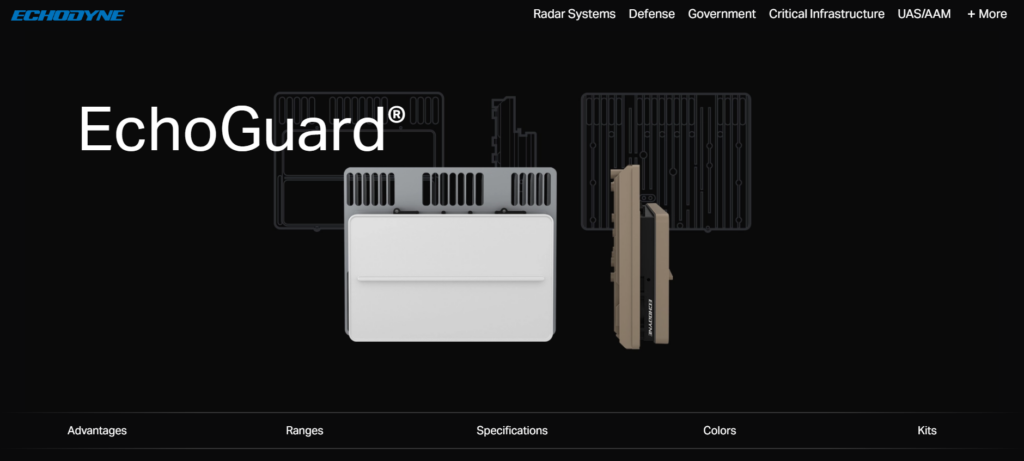
Echodyne EchoGuard uses a proprietary Metamaterial Electronically Scanned Array (MESA) architecture to deliver advanced beam-steering performance in a commercial format. Unlike heavy, rotating mechanical dishes, this solid-state panel utilises electronic scanning to track rapid manoeuvres and maintain continuous contact with high-speed targets. Its compact physical footprint and low power draw make it ideal for integration onto temporary field masts, vehicle roofs, or tight commercial facility boundaries where space is restricted.
Key Strengths:
- Ultra-fast electronic beam steering offers exceptional target refresh rates and high-fidelity coordinate accuracy.
- Small physical profile and light weight allow installation on existing light poles or portable tactical tripods.
- Low energy consumption makes it highly suitable for off-grid or battery-powered mobile security deployments.
Key Limitations:
- Shorter absolute tracking range for micro-UAS targets compared to large, high-power air-defence systems.
- Broad elevation perimeters require mounting multiple physical tiles to achieve wide vertical airspace coverage.
Pricing: Available to commercial customers through certified defence system integrators.
3. HENSOLDT SPEXER 2000 3D -Recommended for Fixed-Site Ground Surveillance Radar Class
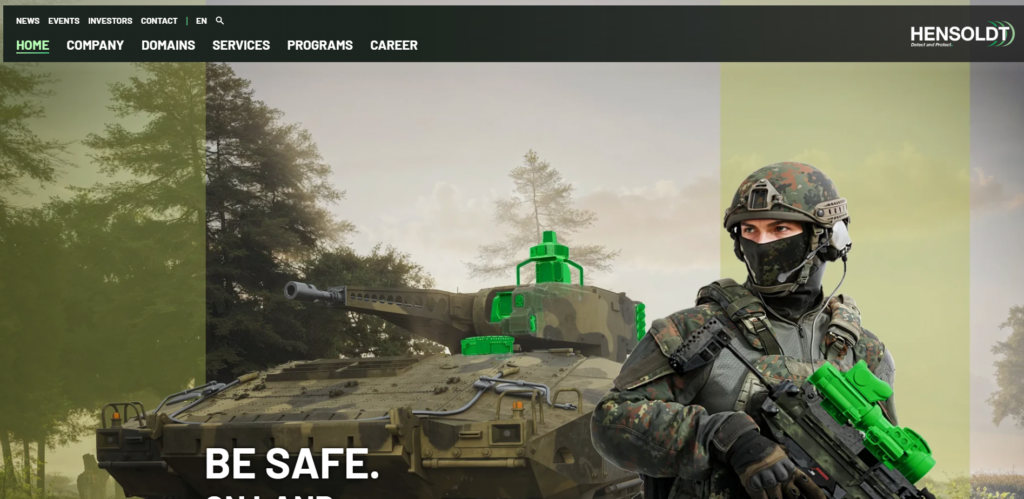
The HENSOLDT SPEXER 2000 3D is a military-grade 3D pulse-Doppler radar system built to secure expansive industrial assets, national perimeters, and defence installations. It is engineered to operate in massive, complex environments by simultaneously isolating slow-moving air threats and crawling ground targets. Its processing backend relies on advanced signal analysis to distinguish actual micro-UAS propulsion signatures from environmental noise, such as wind-blown trees or livestock.
Key Strengths:
- Tracks ground breaches and low-altitude flight paths simultaneously using a single sensor array.
- Military-grade micro-Doppler filtering delivers exceptional target discrimination while minimising false alarms.
- Built to operate continuously in extreme weather, high-wind zones, and harsh climates without performance drop-off.
Key Limitations:
- Significant physical weight and structural size prevent rapid setup or quick relocation by a small team.
- Substantial upfront capital cost and high electrical power requirements during continuous operations, and vulnerability management.
Pricing: Determined via formal procurement tenders based on custom deployment specifications.
4. Thales Ground Master 400A – 3D Air Surveillance Radar Class
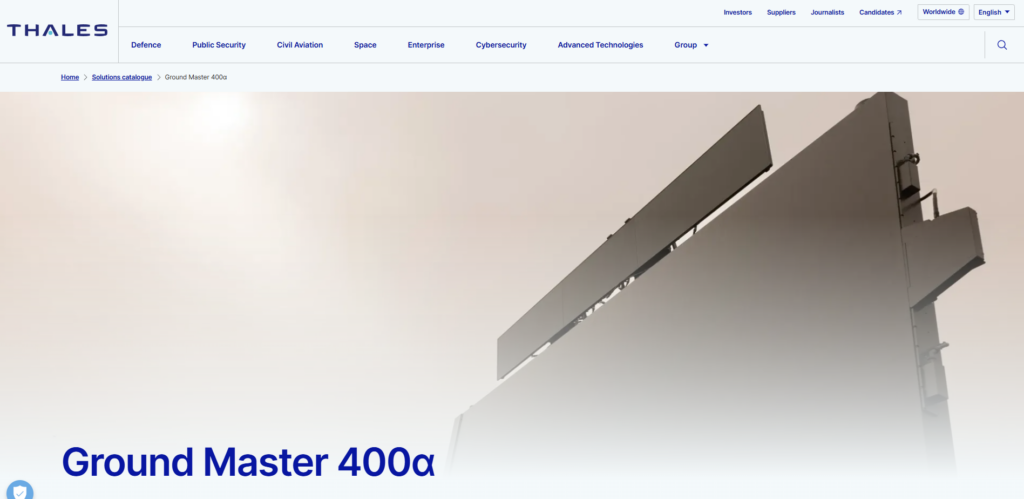
The Thales Ground Master 400A is a long-range tactical air defence radar designed to track a wide range of airborne threats, from fast combat jets to low-altitude, slow-moving drone swarms. It provides a large detection volume and a high maximum tracking height, making it an ideal choice for national defence hubs, military airfields, and sovereign border security operations that require early warning capabilities long before a threat reaches the immediate perimeter.
Key Strengths:
- Massive wide-area volume coverage offers unparalleled warning times against long-range incoming threats.
- High-precision 3D tracking generates exceptionally clean coordinates for long-distance defence coordination.
- Capable of tracking hundreds of simultaneous targets across a vast regional airspace corridor.
Key Limitations:
- Very high acquisition costs and long-term infrastructure maintenance require substantial financial resources.
- Active high-power emissions make it a visible target on the electromagnetic spectrum for electronic warfare units.
Pricing: Governed by international government defence contracts and long-term procurement structures.
5. SpotterRF – Recommended for Compact Perimeter Radar Category
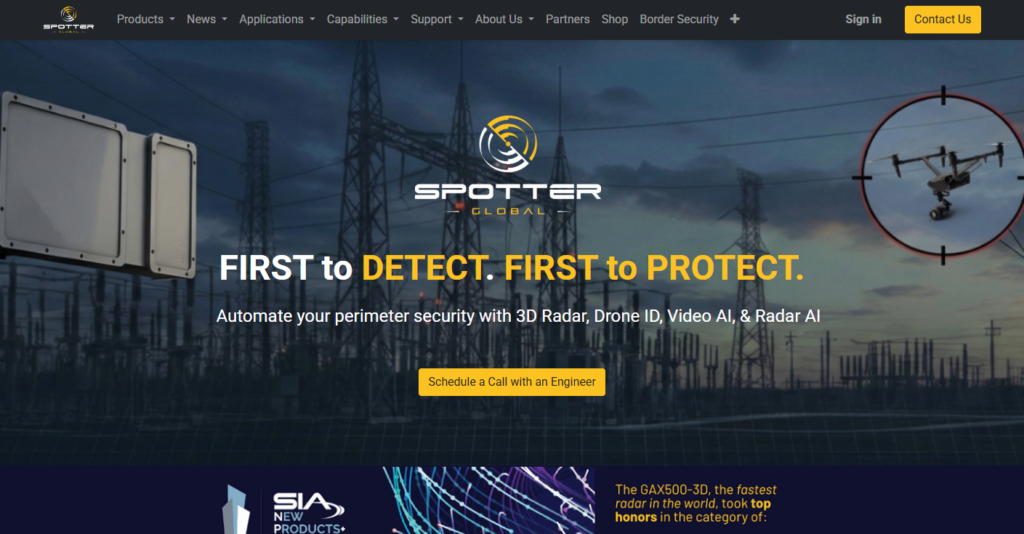
SpotterRF is a lightweight, solid-state commercial perimeter radar engineered to provide localised wide-area surveillance along high-security boundaries and industrial perimeters. The physical units are highly compact and draw minimal power, allowing them to be mounted directly onto existing utility poles or perimeter fences without structural reinforcement. The setup configuration is straightforward, making it an accessible baseline sensor for commercial facilities like electrical substations.
Key Strengths:
- Low unit cost and minimal infrastructure requirements allow for affordable multi-sensor scaling.
- A straightforward IP network setup enables plug-and-play integration with commercial video management systems.
- Very low visual profile at site boundaries, minimising aesthetic impact on corporate properties.
Key Limitations:
- Due to lower mounting heights and localised signal propagation, the radar is highly susceptible to terrain masking and to blocking by trees, buildings, or uneven ground.
- Limited maximum detection range compared to specialised defence-grade radars.
Pricing: Commercial pricing packages are accessible through regional security dealers.
6. Blighter Surveillance Systems – Recommended for Wide-Area Electronic Scanning Ground Radar
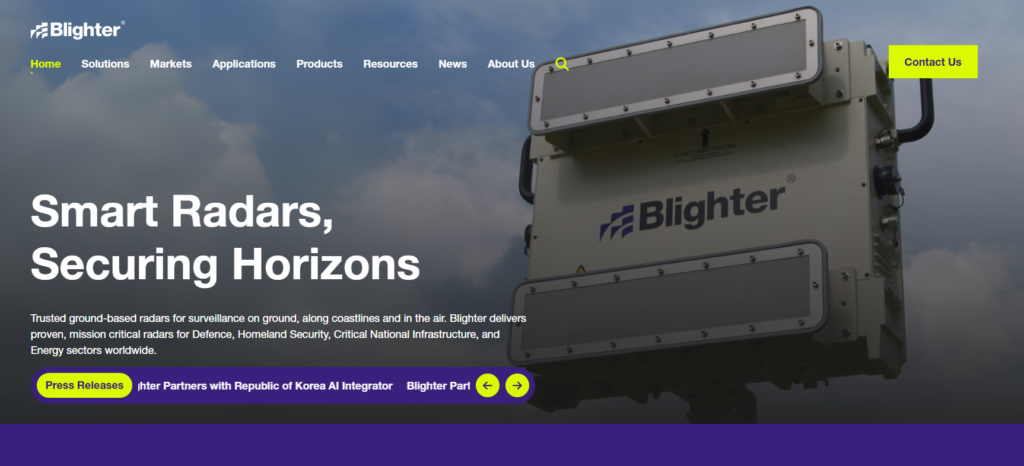
Blighter Surveillance Systems utilises electronic scanning and Frequency Modulated Continuous Wave (FMCW) radar technology to provide continuous area monitoring over difficult terrain. Built with a solid-state design that contains zero moving parts, it dramatically reduces physical wear and mechanical issues. This makes it reliable for continuous operation in extreme environmental conditions, such as freezing mountain passes, desert border zones, or exposed airport runways.
Key Strengths:
- Zero-moving-parts architecture ensures a very high mean time between failures (MTBF) and minimises field maintenance.
- Exceptional performance in high-clutter environments, maintaining steady track plots over rough ground or heavy snow.
- Highly reliable detection of slow, low-altitude fixed-wing drones at long perimeter distances.
Key Limitations:
- Managing broad vertical elevation coverage requires stacking multiple physical panels on top of one another, which increases the total cost and weight of the structural mast.
- High-density panel arrays require careful structural wind-load calculations for high-security masts.
Pricing: Custom corporate deployment quotation models based on area coverage geometry.
7. Saab Giraffe 1X – Recommended for 3D Air Surveillance for Base/Force Protection

The Saab Giraffe 1X is a highly mobile, lightweight 3D multi-mission radar system engineered to provide short-range air defence and persistent airspace tracking for active military forces. It delivers high-density target tracking for ultra-fast assets alongside dedicated, slow-moving micro-UAS tracking algorithms. It operates continuously while moving on a tactical vehicle platform, ensuring uninterrupted protection for mobile convoys, forward operating outposts, and field forces.
Key Strengths:
- On-the-move tracking capability allows full operational protection during active tactical troop manoeuvres.
- Exceptional dual-mode processing tracks hypersonic missiles and tiny hovering drones simultaneously.
- Short system initialisation and breakdown times allow rapid deployment changes in fluid field conditions.
Key Limitations:
- Demands specialised integration into vehicle charging, cooling, and mechanical structures, creating technical overhead during deployment.
- A high emission signature requires strict operational management to mitigate electronic warfare detection.
Pricing: Fixed through formal defence supply contracts.
8. Terma SCANTER – Recommended for Maritime Radar Category

The Terma SCANTER series consists of high-resolution coastal and naval surveillance radars optimised for tracking small, low-altitude targets near water surfaces. These radars feature highly specialised processing software engineered to filter out heavy sea clutter, enabling them to track small drones flying low over waves or operating within busy marine ports, oil platforms, and coastal borders.
Key Strengths:
- Industry-leading sea clutter suppression maintains clear drone tracking over moving waves and rough coastal waters.
- Extended range performance allows comprehensive monitoring of maritime approach vectors and maritime borders.
- Built with extreme environmental sealing to withstand corrosive marine air and continuous salt spray.
Key Limitations:
- The continuous mechanical rotation system requires strict maintenance schedules to prevent mechanical wear from salt fog and coastal marine environments.
- Highly specialised software integration requires deep engineering coordination to integrate with land-based security networks.
Pricing: Structured custom pricing based on naval platform or coastal station scale.
9. Robin Radar IRIS – Recommended for High-Reliability Urban Micro-Doppler Category
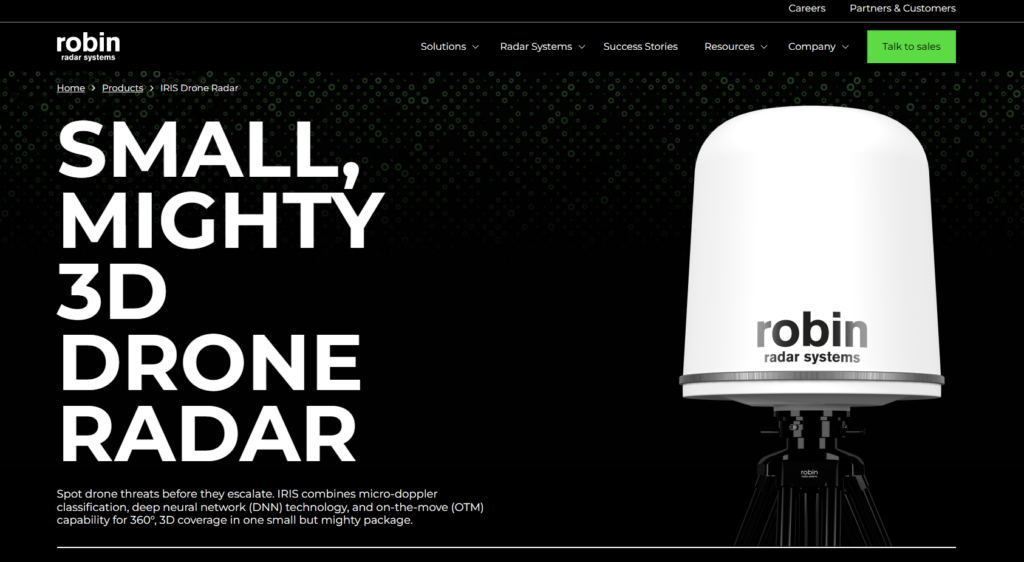
The Robin Radar IRIS is a compact 3D radar system specifically engineered to track micro-UAS targets in dense, high-clutter urban centres. It uses advanced deep-learning micro-Doppler classification paired with neural networks to differentiate the physical rotation of drone blades from environmental noise. This directly addresses the high false-alarm burden typical of city environments, where traffic, tall buildings, and heavy bird populations disrupt standard sensors.
Key Strengths:
- Deep Neural Network (DNN) technology instantly separates drone signatures from those of birds, reducing the operator’s alert burden.
- Provides full 60-degree vertical coverage, preventing drones from executing vertical “drop-down” blind-spot manoeuvres directly over assets.
- Lightweight 29kg design can be carried and deployed by a single person onto standard facility rooftops or tripods in under 15 minutes.
Key Limitations:
- The absolute instrumented range is limited to 5km for small drones, requiring nested nodes to cover large enterprise areas.
- Performance can be limited by physical line-of-sight blockages if mounted below the city skyline roof level.
Pricing: Provided via enterprise configuration consultation based on site structure and node count.
10. Northrop Grumman AN/TPS-80 G/ATOR – Recommended for Long-Range Active Phased Array Defense Category

The Northrop Grumman AN/TPS-80 G/ATOR is an advanced Multi-Mission Active Electronically Scanned Array (AESA) radar designed for comprehensive, multi-domain airspace awareness. It provides high transmission power to yield tracking continuity for low-RCS drones at long ranges, even in highly contested or electronically jammed airspaces. It integrates into military Forward Area Air Defence (FAAD) and tactical air command networks.
Key Strengths:
- GaN-powered active phased array provides detection and target retention across heavy electronic countermeasures.
- Multi-mission software definitions enable seamless switching between counter-UAS tracking, air traffic control, and weapon cueing functions.
- Long-range early warning volume allows defence coordinators to build comprehensive tactical response plans early.
Key Limitations:
- Massive physical weight and industrial transport footprint require heavy military logistics vehicles and dedicated generator support networks.
- Extreme acquisition and lifecycle sustainment costs limit its deployment to national-level defence budgets.
Pricing: Governed by formal state defence procurement frameworks and institutional budgets.
11. Fortem TrueView – Recommended for Ultra-Low SWaP Commercial Infrastructure Radar
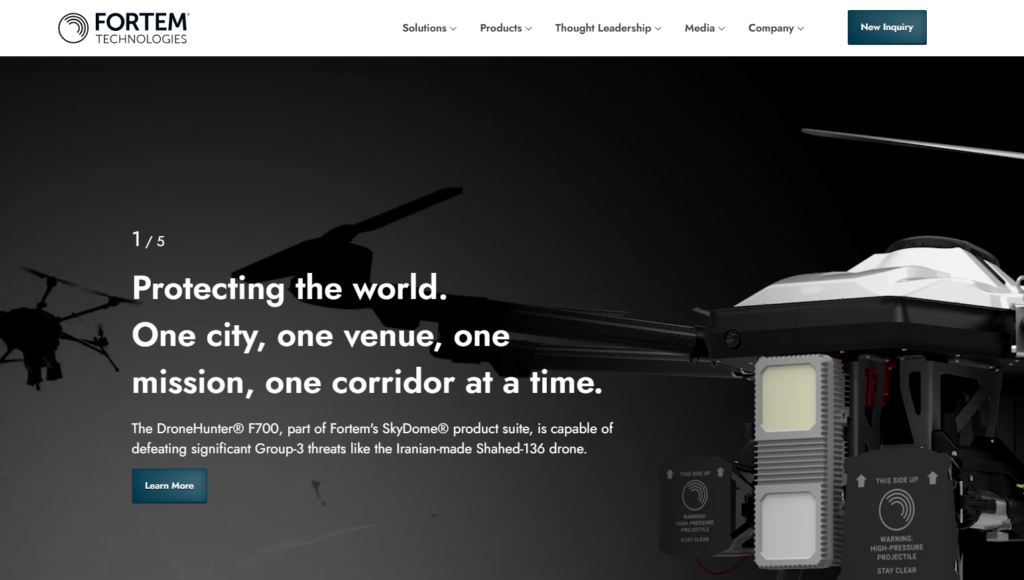
The Fortem TrueView series utilises miniature, true AESA digital beamforming technology to provide localised close-range airspace protection. Engineered with a strict focus on minimising Size, Weight, Power, and Cost (SWaP-C), these low-profile panels enable small, critical facilities such as oil pumping stations, correctional facilities, or corporate estates to deploy active radar tracking without extensive structural engineering.
Key Strengths:
- Consumes as little as 38 watts, allowing the unit to run continuously on lightweight off-grid solar trailer systems.
- Onboard AI processing uses localised convolutional neural networks to classify targets directly at the edge, reducing network bandwidth requirements.
- Advanced space-time adaptive processing (STAP) filters out ground reflections, allowing it to detect low-flying threats near the soil line.
Key Limitations:
- Short maximum tracking range requires a highly nested network structure to achieve early warning capabilities over broad horizons.
- Requires close pairing with optical tracking units to confirm details of a small, slow-moving payload.
Pricing: Standard commercial equipment bundling packages available through authorised industrial security providers.
12. ASELSAN RETINAR FAR-AD – Recommended for Dual-Band Asymmetric Perimeter Radar Class
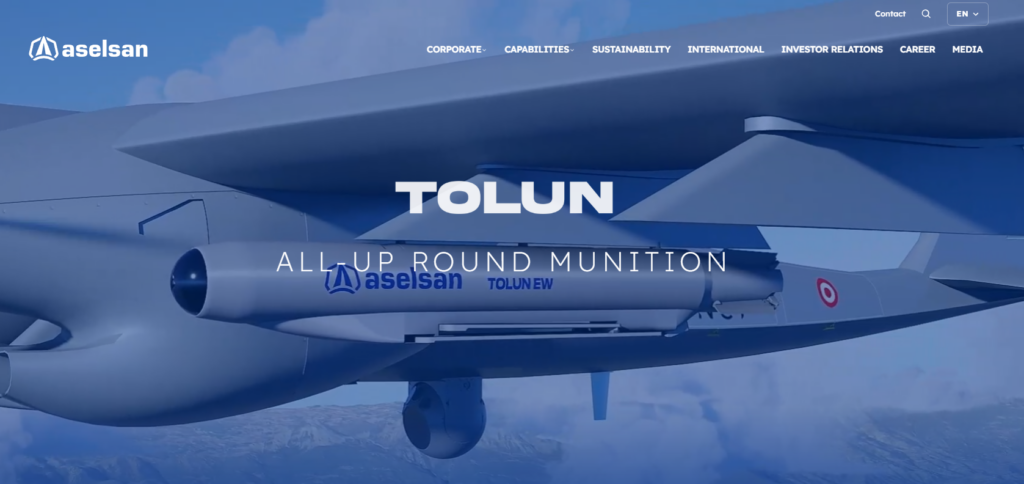
The Meteksan Retinar FAR-AD is a specialised Ku-band digital pulse-Doppler radar system engineered to deliver Low Probability of Intercept (LPI) operation in highly contested perimeters. It utilises customised pulse-compression waveforms to track small drones at long ranges while maintaining a low electromagnetic profile. This makes it difficult for hostile electronic intelligence (ELINT) units to locate or disrupt.
Key Strengths:
- A Low Probability of Intercept (LPI) radio frequency design protects the host facility from being targeted via radio-emission tracking.
- Adjustable scanning speeds (4 to 32 rpm) allow operators to optimise the sensor for fast-moving targets or slow-crawling threats.
- Natively provides continuous 40-degree vertical-elevation tracking to detect steep dives over high-value zones.
Key Limitations:
- Ku-band radar signals can be attenuated and experience reduced tracking range during heavy, dense rainfall or extreme fog.
- The physical pan-and-tilt hardware tracking assembly demands regular lubrication and field upkeep in dusty environments.
Pricing: Custom project architecture deployment mapping based on military and security tender configurations.
13. Leonardo DRS MHR – Recommended for Mobile On-The-Move Expeditionary Tracking Radar

The Leonardo DRS Multi-Mission Hemispheric Radar (MHR) is a solid-state, non-rotating radar platform built to mount directly onto tactical combat vehicles, light patrol trucks, or mobile security platforms. Using static conformal panels, it achieves full 360-degree azimuth coverage and high-elevation tracking while the vehicle is driving at high speeds over rough terrain, making it an exceptional choice for convoy protection and rapid expeditionary deployment.
Key Strengths:
- Non-moving, pulse-Doppler conformal panels withstand intense mechanical vibration, road shock, and blast impact.
- Hemispheric coverage geometry provides seamless tracking continuity from the horizon to high overhead approach vectors.
- Compact vehicle-roof installation preserves the vehicle’s low-profile signature in tactical operational fields.
Key Limitations:
- Lower maximum altitude ceiling compared to large, high-altitude rotating air-defence surveillance systems.
- Demands a clear, unobstructed vehicle roof line to prevent vehicle equipment from causing radar tracking blind spots.
Pricing: Fixed through formal defence procurement channels and vehicle integration contracts.
Unifying Airspace Awareness for Decisive Action
Relying on a single radar sensor to solve your counter-UAS requirements introduces significant technical debt. Real-world factors like terrain masking, urban structures, and heavy environmental clutter quickly disrupt simple sensor assumptions, meaning your radar selection must be driven entirely by the physical reality.
To build an air defence stack that truly protects your facility, you must prioritise rapid multi-sensor verification, a minimal false-alarm burden, and a clean track handoff that supports decisive action under intense time pressure and within legal/ROE constraints.
This unified architecture is where the SKYLOCK platform delivers its core value. Rather than forcing your security teams to manage isolated alerts, SKYLOCK integrates radar tracks with EO/IR verification and response workflows to support operator-light operations and interoperability with existing command environments. To discuss integration options for your site and mission profile, talk to a SKYLOCK defence expert today.